EIRA
EIRA
1 month
1 month
BOLIA AWARDS 2025
BOLIA AWARDS 2025
Furniture Design
Furniture Design
Stability Analysis
Stability Analysis
Geometric Development
Geometric Development
Material Contrast
Material Contrast
PROJECT OVERVIEW
PROJECT OVERVIEW
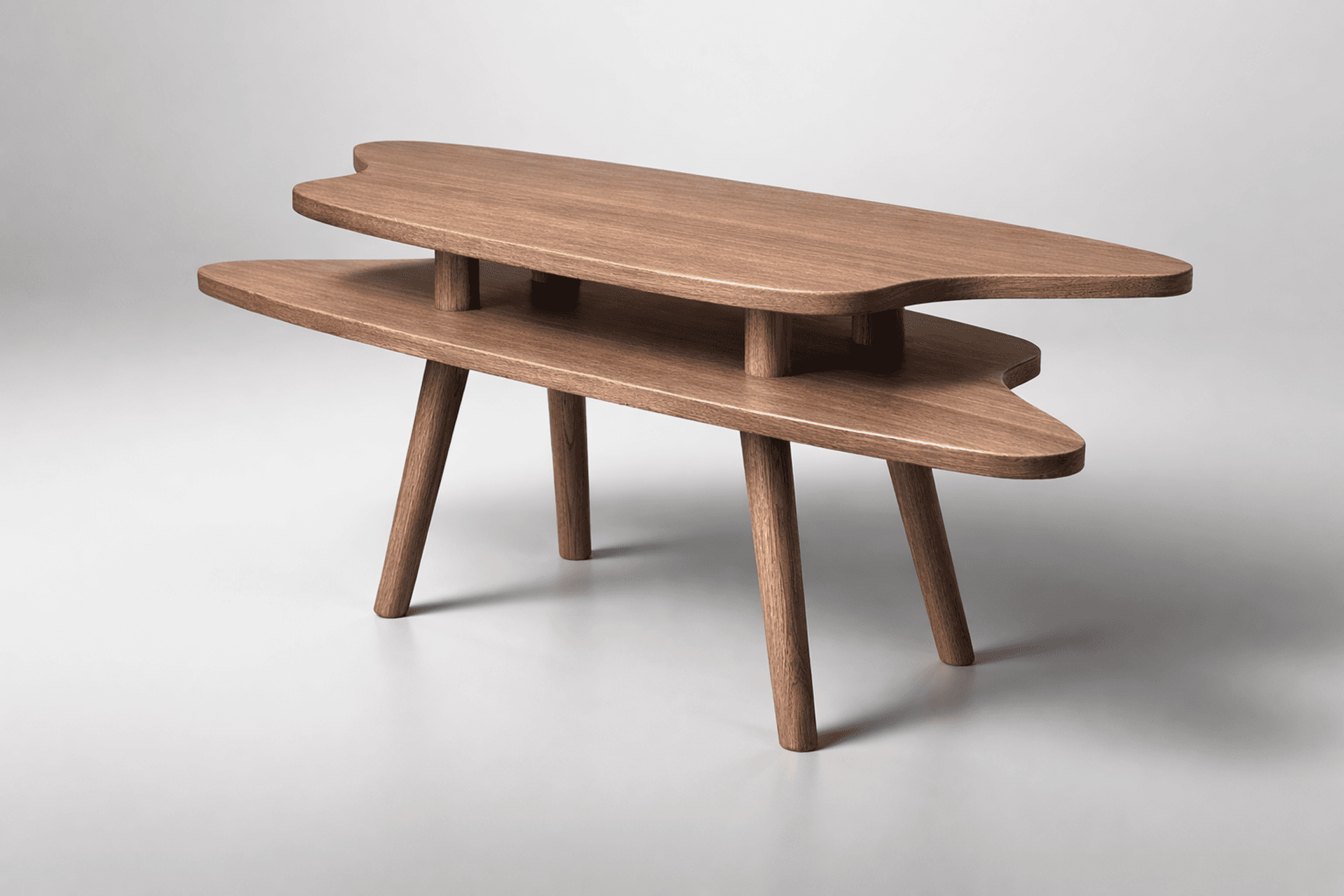
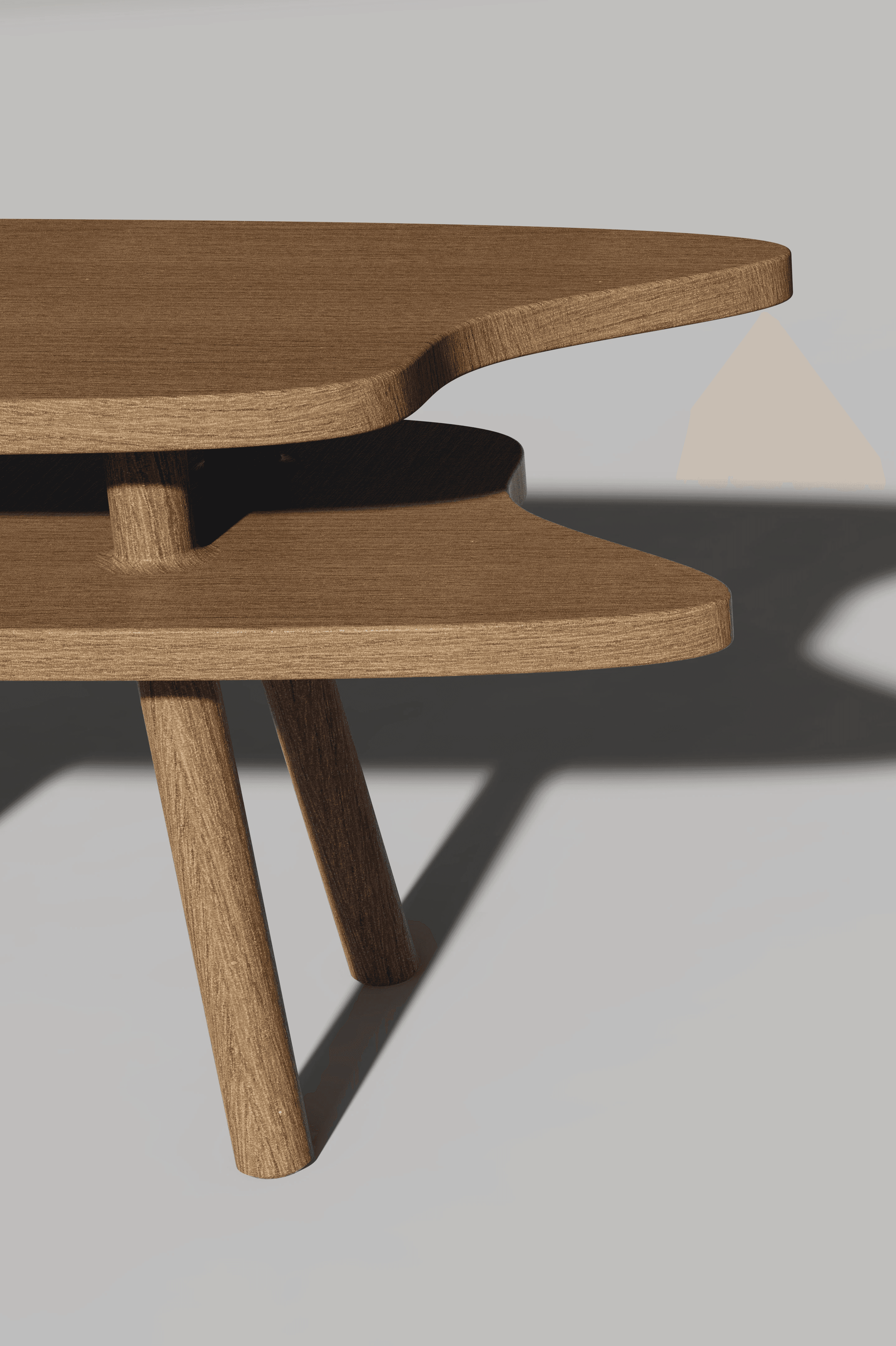
EIRA is an independently developed solid oak coffee table exploring structural balance within an asymmetrical two-plane configuration. Two horizontally separated surfaces are connected through vertical supports and angled legs, ensuring controlled load transfer and lateral stability. The project focused on proportion control within a reduced geometric language, developed through 1:5 scale modeling and digital refinement.
EIRA is an independently developed solid oak coffee table exploring structural balance within an asymmetrical two-plane configuration. Two horizontally separated surfaces are connected through vertical supports and angled legs, ensuring controlled load transfer and lateral stability. The project focused on proportion control within a reduced geometric language, developed through 1:5 scale modeling and digital refinement.
The Challenge
The Challenge
The primary challenge was to design a structurally stable coffee table that prioritizes long-term durability and repairability within a Scandinavian design language. The offset two-plane configuration required careful load distribution while maintaining material efficiency and visual lightness. Material selection and joinery were considered with longevity in mind, accounting for dimensional movement in solid wood and enabling potential disassembly or repair without compromising structural integrity.
The primary challenge was to design a structurally stable coffee table that prioritizes long-term durability and repairability within a Scandinavian design language. The offset two-plane configuration required careful load distribution while maintaining material efficiency and visual lightness. Material selection and joinery were considered with longevity in mind, accounting for dimensional movement in solid wood and enabling potential disassembly or repair without compromising structural integrity.
Process
Process
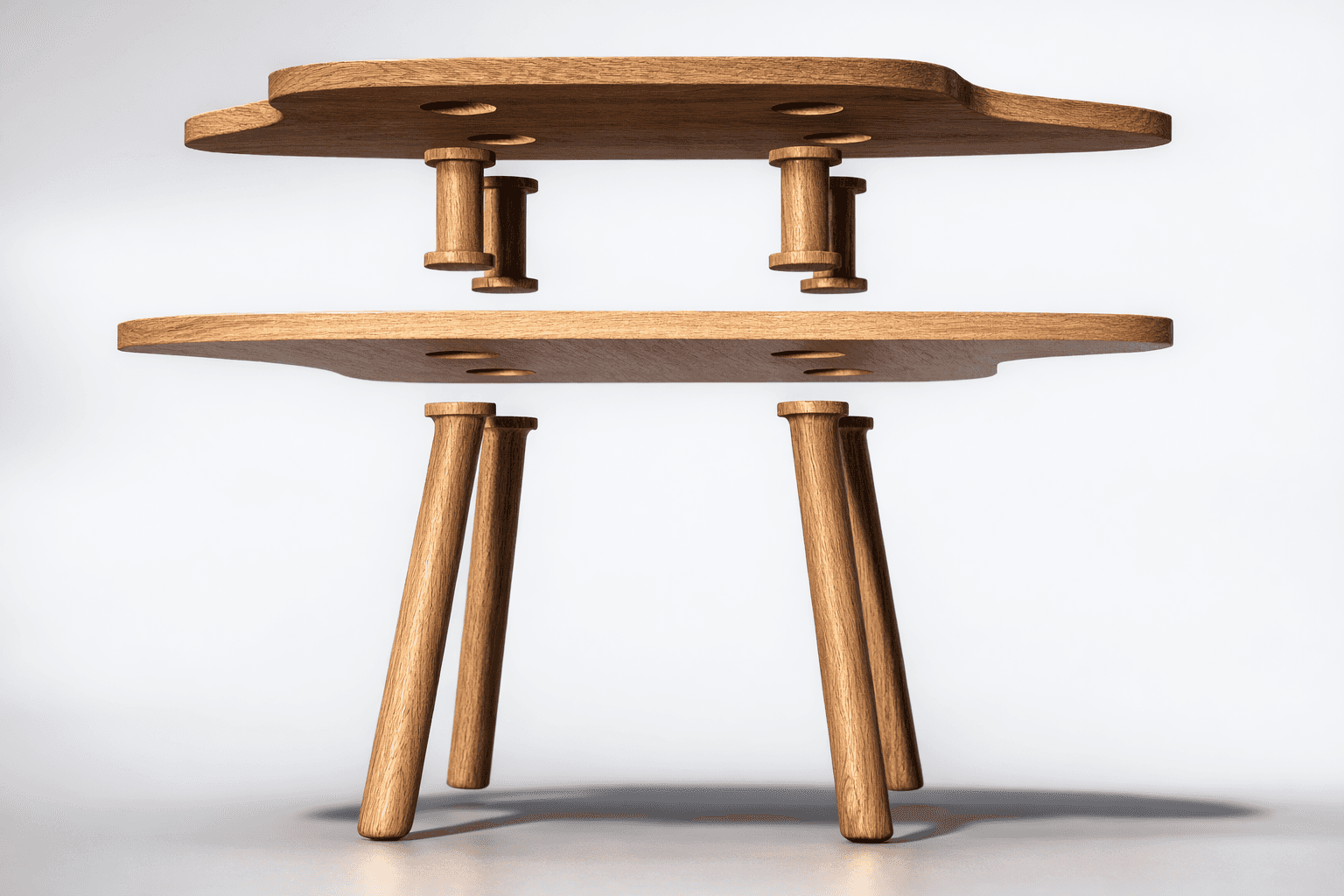
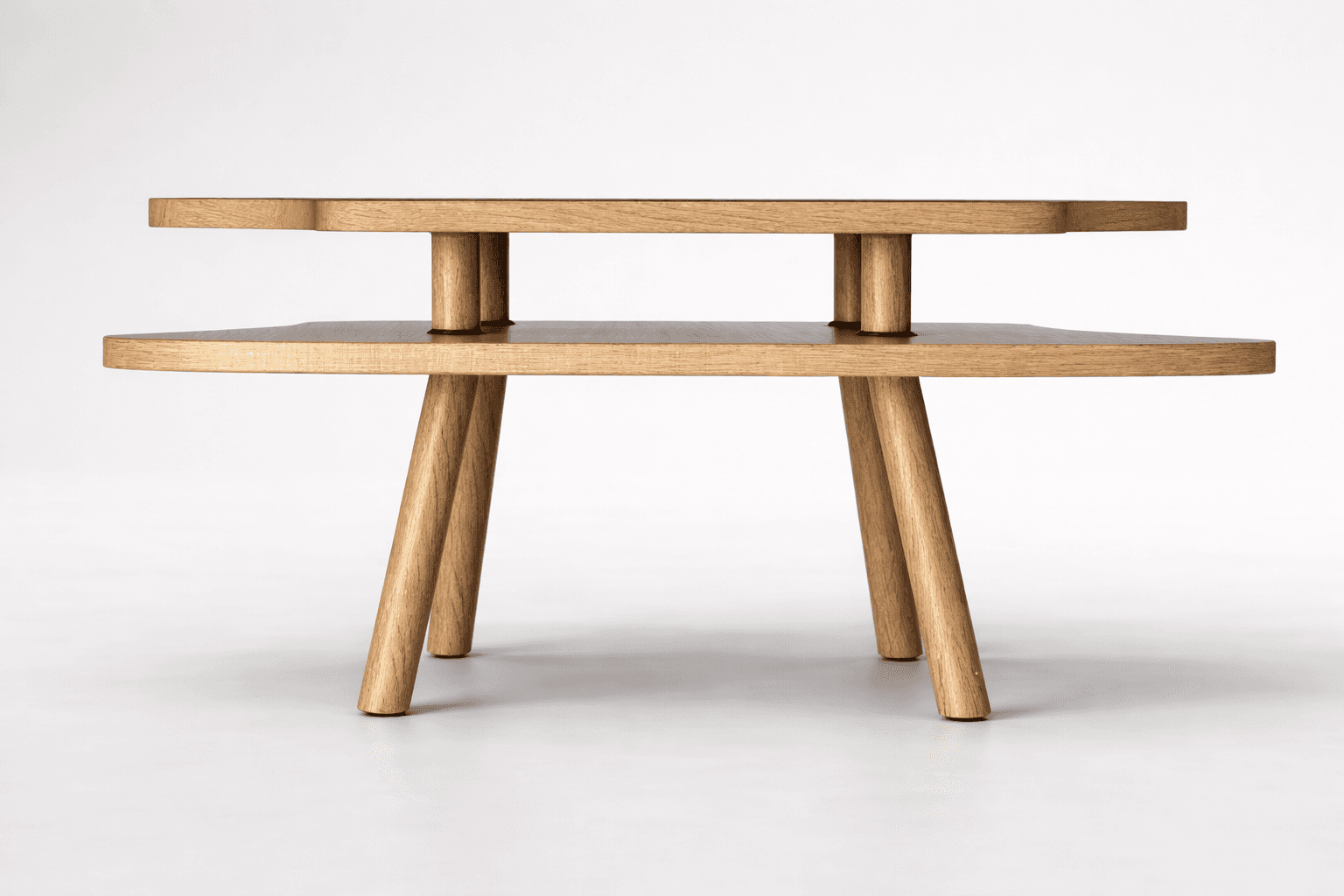
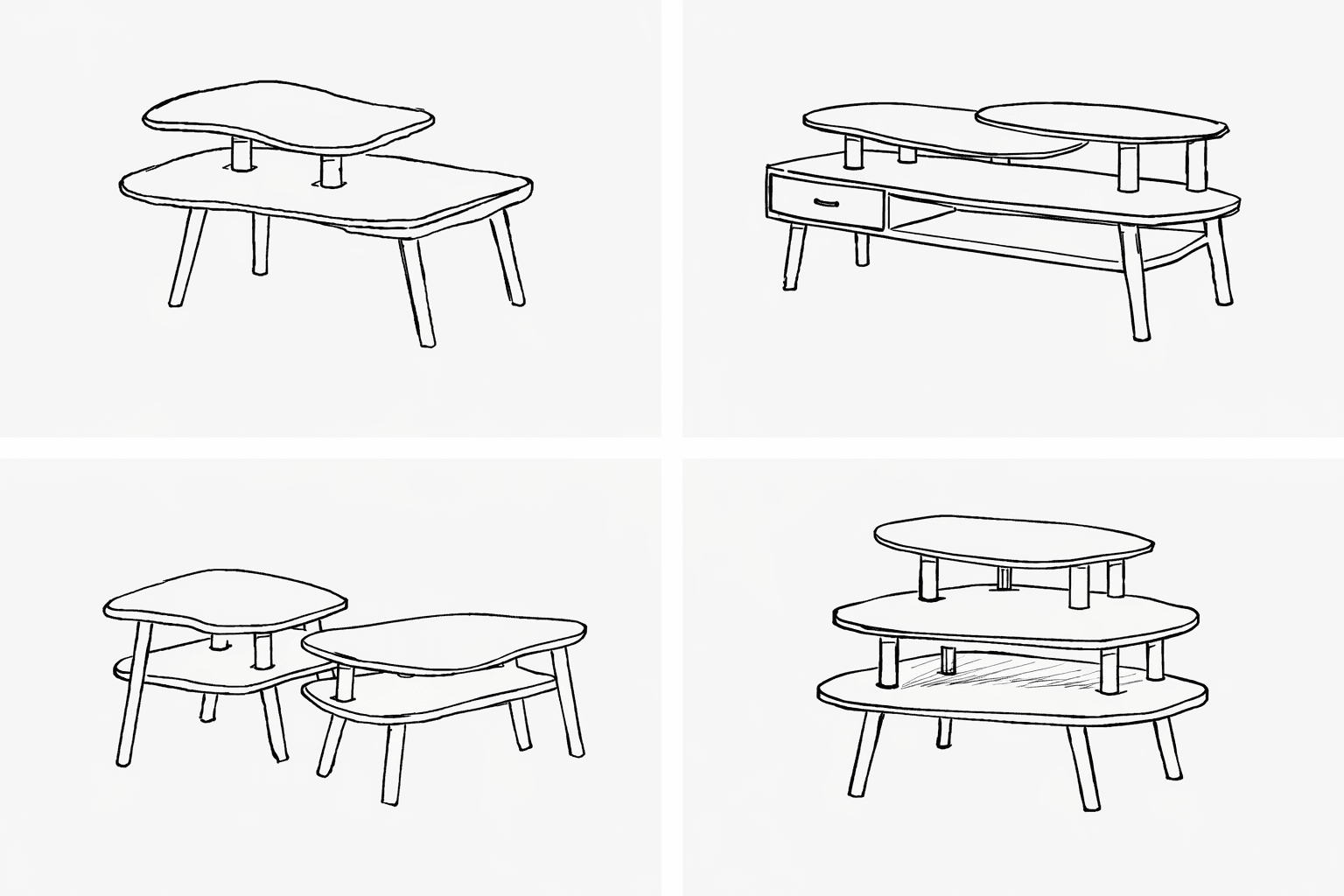
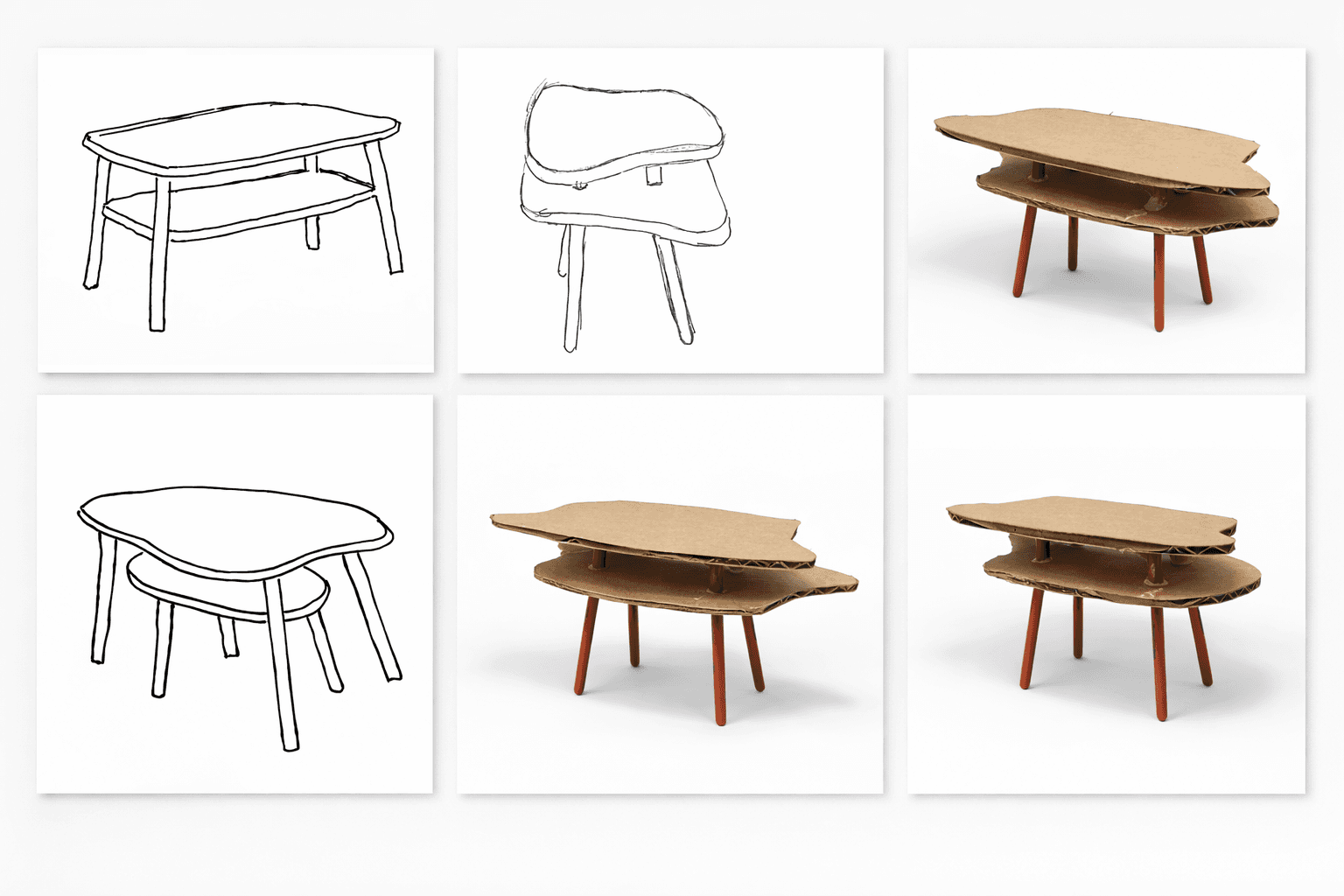
I developed the geometry through proportion studies and iterative sketching, followed by a 1:5 physical scale model to evaluate balance, leg positioning, and center-of-gravity alignment. Based on these findings, the design was digitally refined to improve structural logic and alignment between supports and legs. Material thickness was adjusted to balance stiffness with visual lightness, and the final configuration was validated for assembly feasibility and direct load transfer.
I developed the geometry through proportion studies and iterative sketching, followed by a 1:5 physical scale model to evaluate balance, leg positioning, and center-of-gravity alignment. Based on these findings, the design was digitally refined to improve structural logic and alignment between supports and legs. Material thickness was adjusted to balance stiffness with visual lightness, and the final configuration was validated for assembly feasibility and direct load transfer.
Reflection
This project strengthened my understanding of structural balance in asymmetrical furniture design and the importance of evaluating center-of-gravity early in development. The 1:5 scale model proved essential for validating stability beyond visual assumptions.
It reinforced the value of combining physical prototyping with digital refinement when designing durable, load-bearing wooden structures within a reduced Scandinavian design language.
Reflection
This project strengthened my understanding of structural balance in asymmetrical furniture design and the importance of evaluating center-of-gravity early in development. The 1:5 scale model proved essential for validating stability beyond visual assumptions.
It reinforced the value of combining physical prototyping with digital refinement when designing durable, load-bearing wooden structures within a reduced Scandinavian design language.
A
A