HOLD
HOLD
3 weeks
3 weeks
Product development
Product development
Product Engineering
Product Engineering
Compact Mechanism
Compact Mechanism
Friction-Based Holding
Friction-Based Holding
Material Contrast
Material Contrast
PROJECT OVERVIEW
PROJECT OVERVIEW
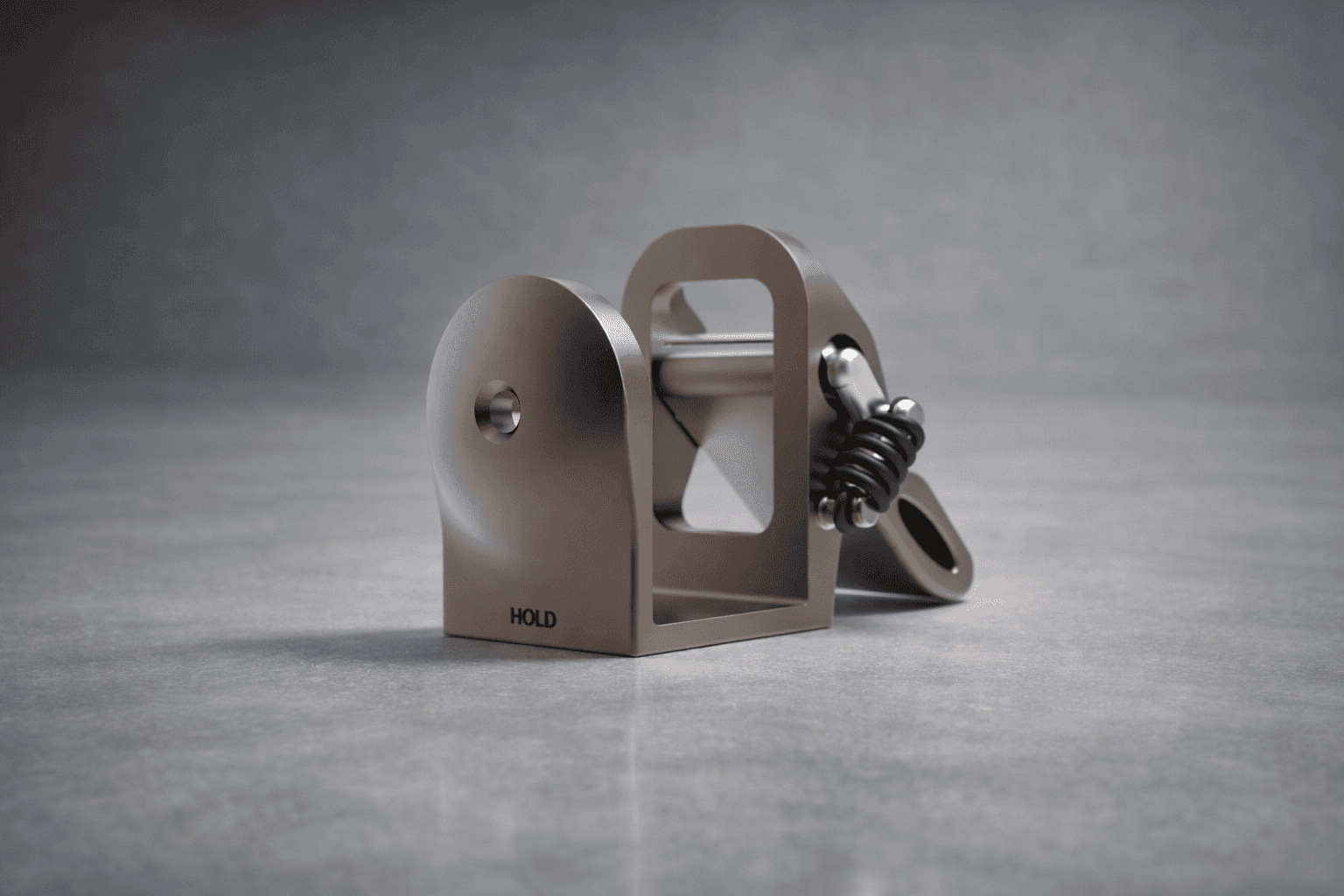
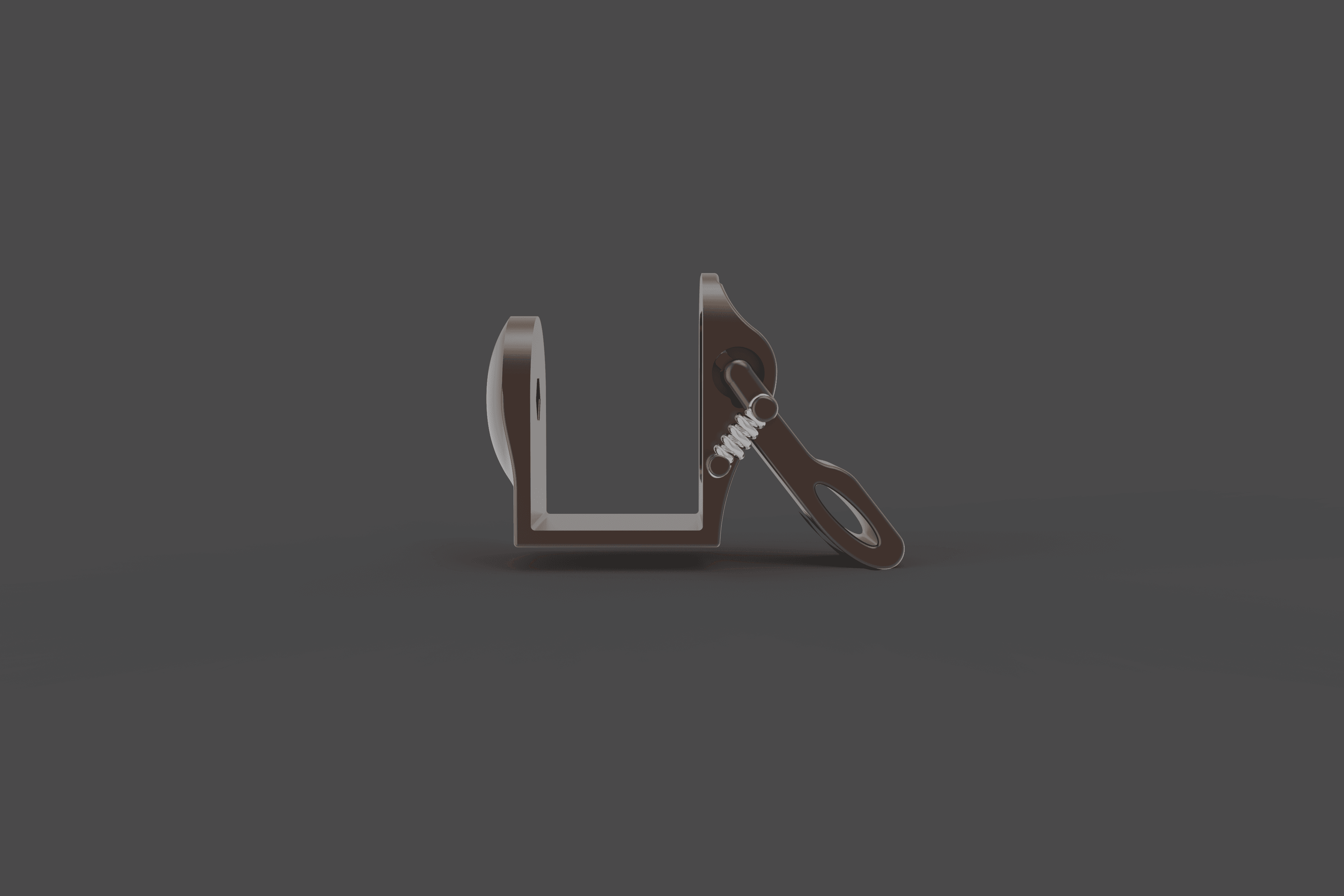
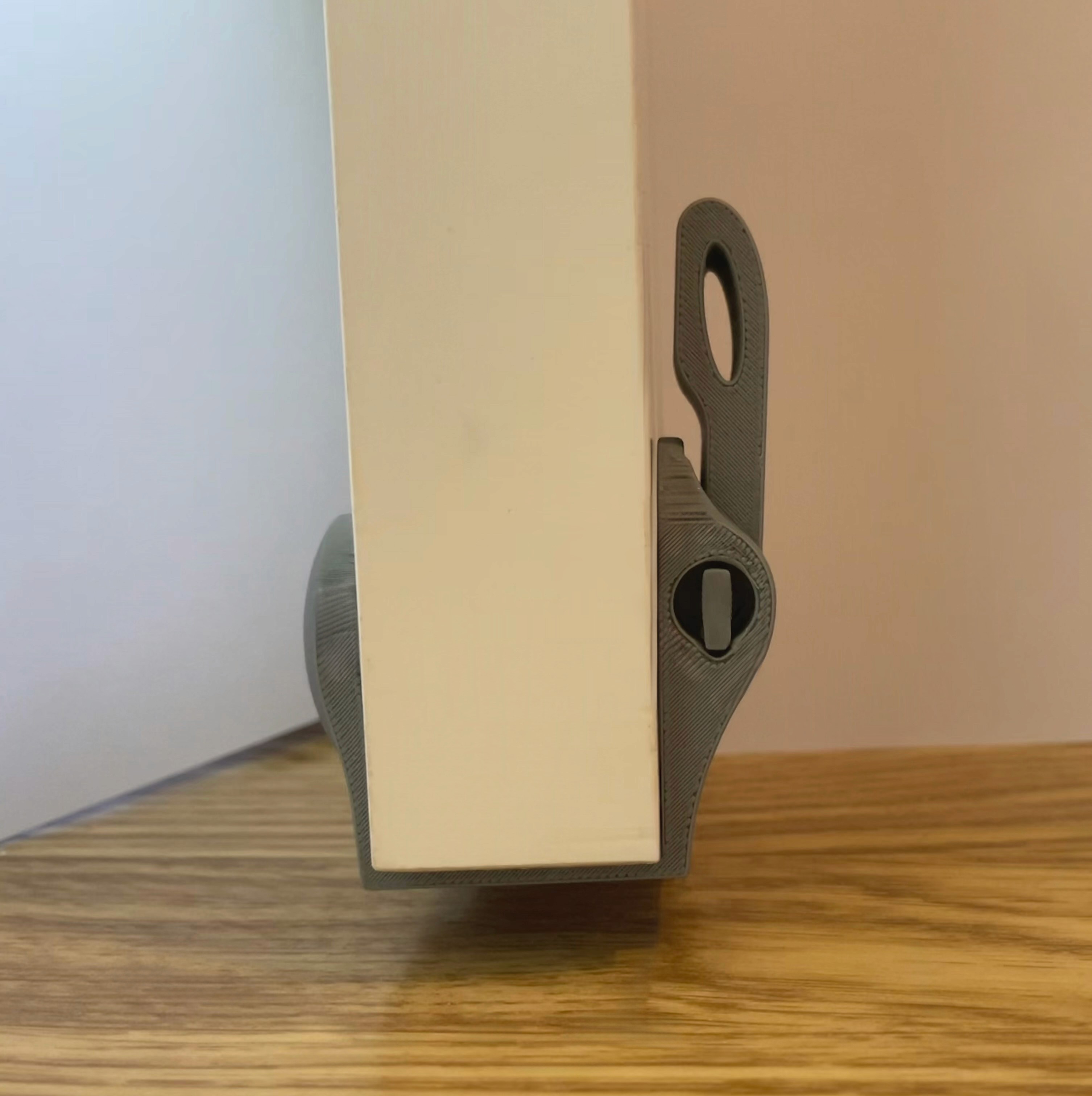
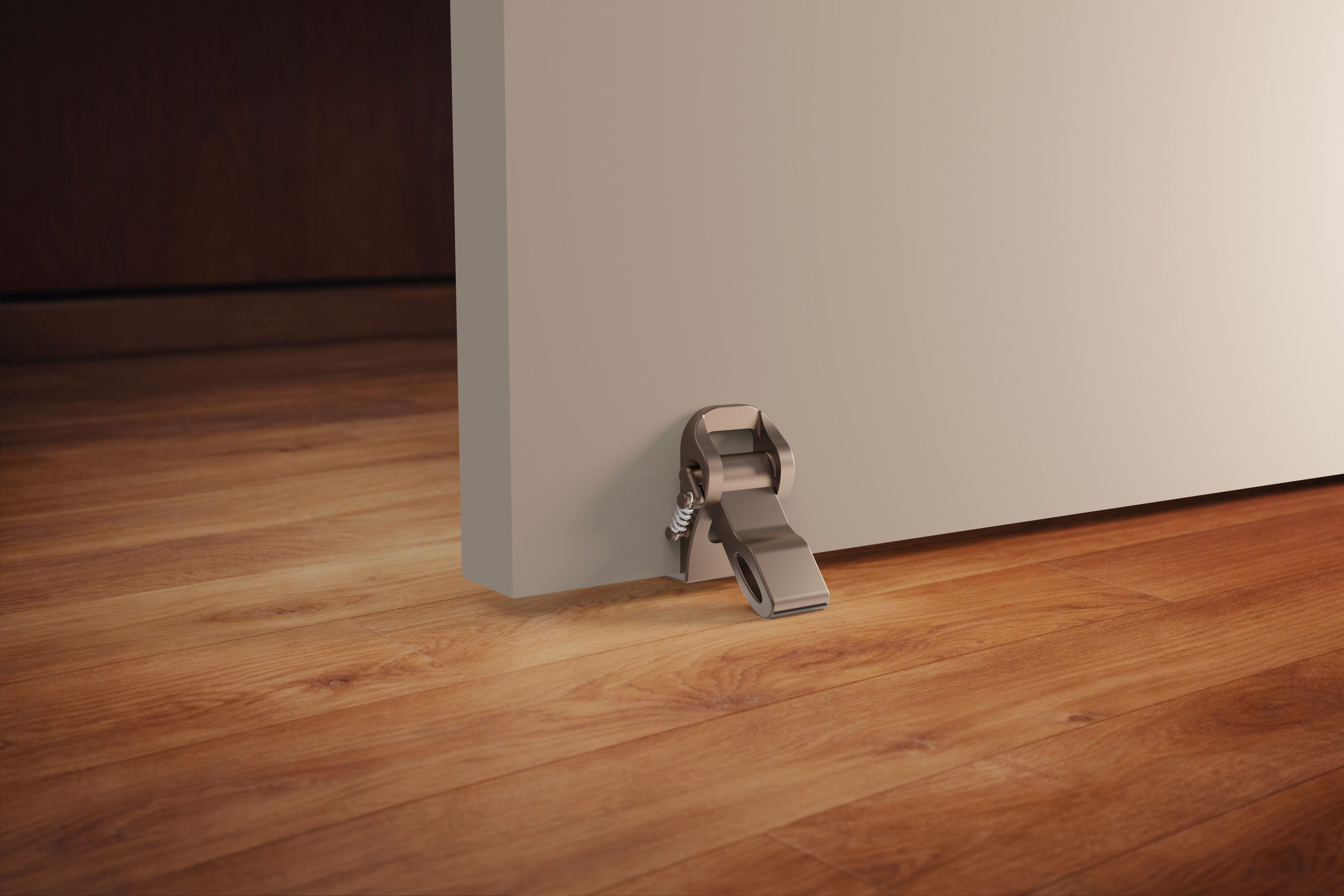
HOLD is an independently developed portable mechanical door holder integrating a spring-loaded snap-lock mechanism within a compact metal housing. Mounted using a non-invasive fastening system, it ensures secure positioning without permanent door modification. The design focused on controlled force transfer, structural rigidity, and reliability under repeated load cycles.
HOLD is an independently developed portable mechanical door holder integrating a spring-loaded snap-lock mechanism within a compact metal housing. Mounted using a non-invasive fastening system, it ensures secure positioning without permanent door modification. The design focused on controlled force transfer, structural rigidity, and reliability under repeated load cycles.
The Challenge
The Challenge
The primary challenge was to design a compact, removable mechanism capable of maintaining consistent holding force without damaging the door structure. The system needed to withstand repeated activation and dynamic loads, including external forces such as wind, without deformation or functional loss. A key focus was ensuring stable floor contact through the spring-loaded arm, generating sufficient normal force to prevent sliding while allowing controlled activation. The snap-lock mechanism had to provide defined positional stability without increasing mechanical complexity.
The primary challenge was to design a compact, removable mechanism capable of maintaining consistent holding force without damaging the door structure. The system needed to withstand repeated activation and dynamic loads, including external forces such as wind, without deformation or functional loss. A key focus was ensuring stable floor contact through the spring-loaded arm, generating sufficient normal force to prevent sliding while allowing controlled activation. The snap-lock mechanism had to provide defined positional stability without increasing mechanical complexity.
Process
Process
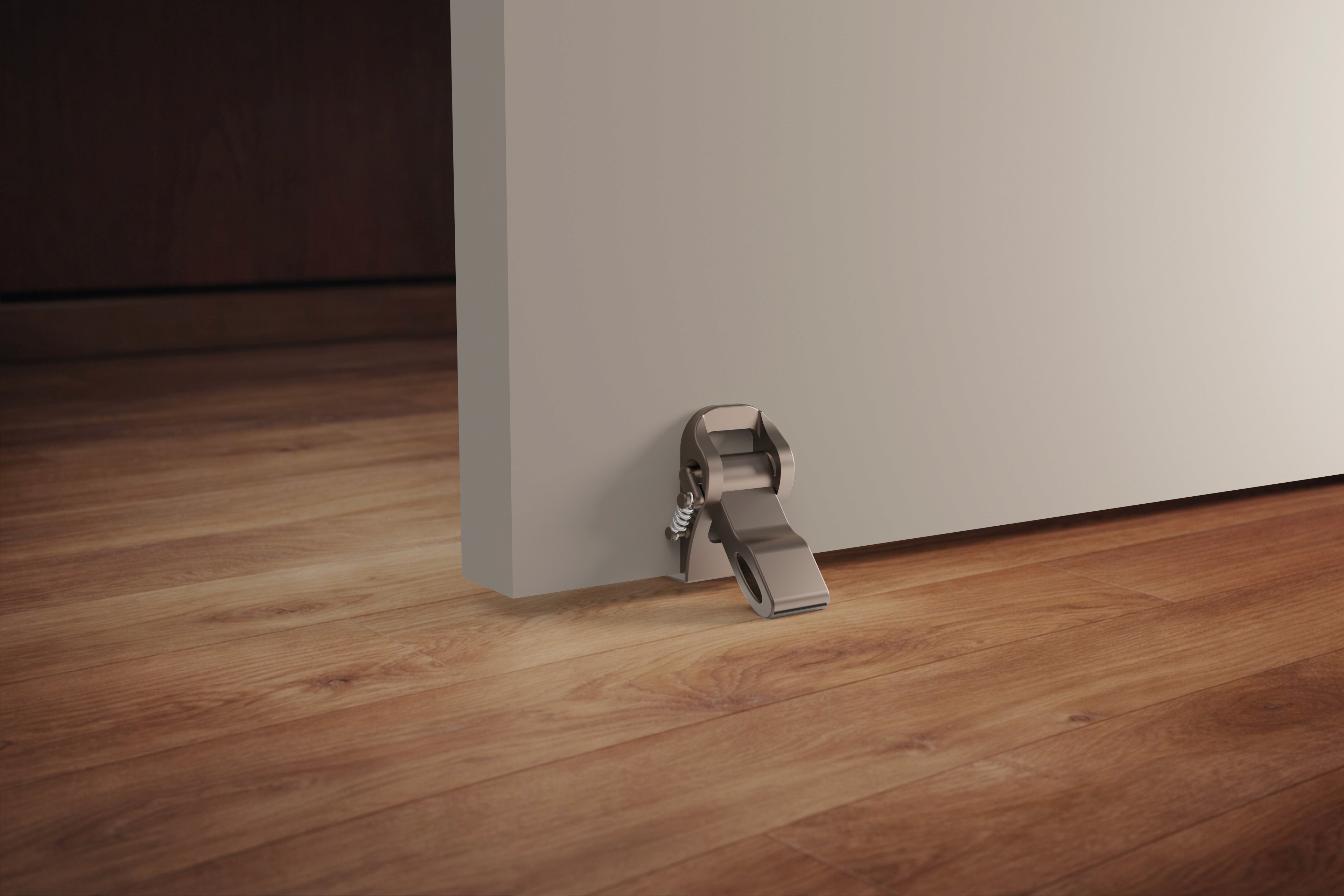
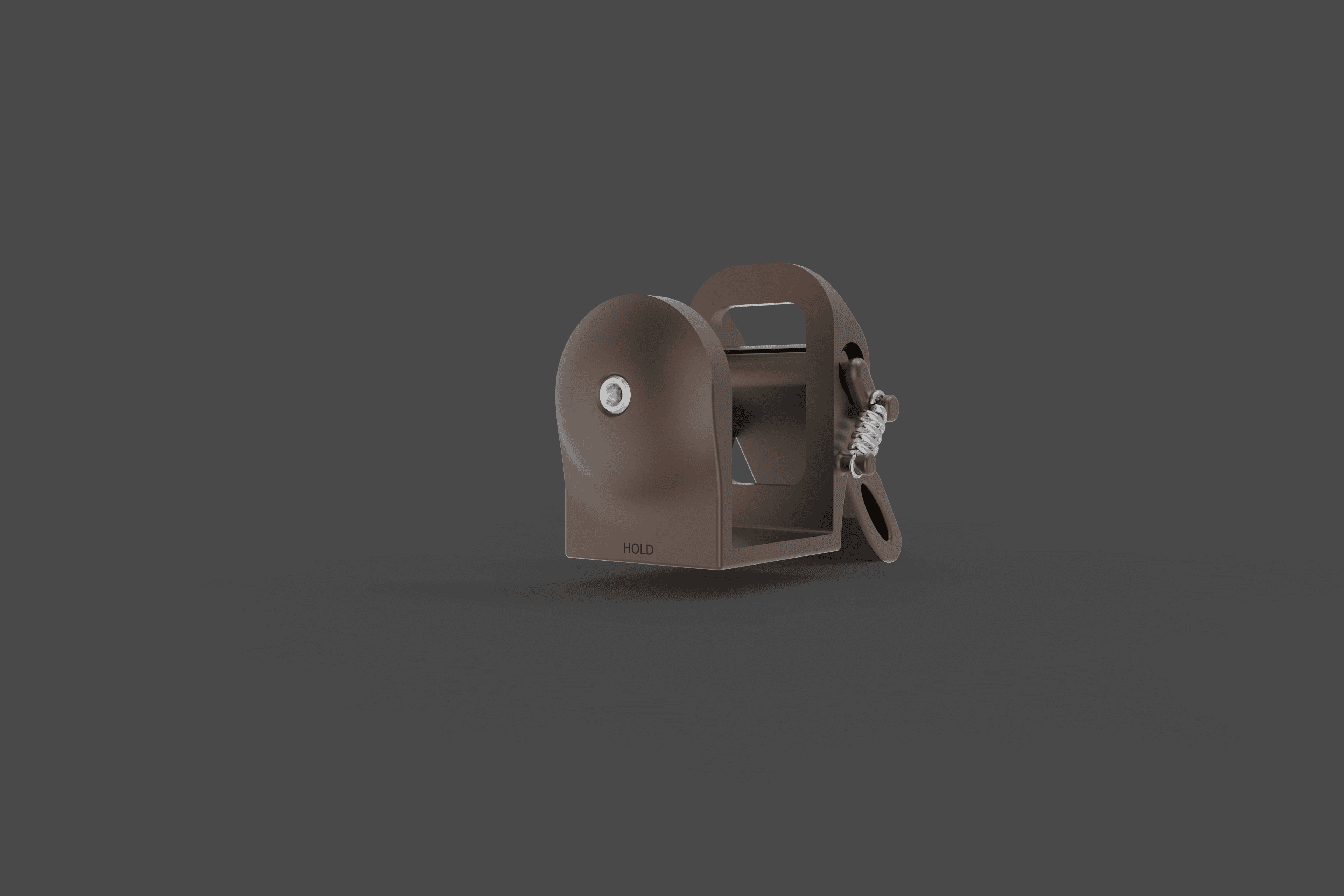
I developed three mechanical concepts and evaluated them using structured selection methods before defining the final force logic. The chosen solution integrates a snap-lock system for fixed positioning and a spring-loaded arm that transfers force downward to generate frictional resistance against the floor. The housing geometry was designed to distribute load from the door through the structural body and fastening interface. The complete assembly was modeled in CAD to evaluate alignment, tolerance stacking, and load paths, with iterative refinement to reduce mechanical play and balance stiffness with compact proportions
I developed three mechanical concepts and evaluated them using structured selection methods before defining the final force logic. The chosen solution integrates a snap-lock system for fixed positioning and a spring-loaded arm that transfers force downward to generate frictional resistance against the floor. The housing geometry was designed to distribute load from the door through the structural body and fastening interface. The complete assembly was modeled in CAD to evaluate alignment, tolerance stacking, and load paths, with iterative refinement to reduce mechanical play and balance stiffness with compact proportions

Reflection
The development of HOLD strengthened my understanding of force transmission in compact mechanical systems. Integrating a snap-lock mechanism with a spring-loaded arm required precise load path definition and tolerance control, as small geometric deviations directly affected alignment and mechanical play.
I also recognized the sensitivity of friction-based resistance, where performance depends on spring force, floor material, and wear over time. If further developed for production, I would conduct fatigue testing of the spring and refine rotational interfaces to improve long-term durability.
Reflection
The development of HOLD strengthened my understanding of force transmission in compact mechanical systems. Integrating a snap-lock mechanism with a spring-loaded arm required precise load path definition and tolerance control, as small geometric deviations directly affected alignment and mechanical play.
I also recognized the sensitivity of friction-based resistance, where performance depends on spring force, floor material, and wear over time. If further developed for production, I would conduct fatigue testing of the spring and refine rotational interfaces to improve long-term durability.
C
C