RØN
RØN
2 months
2 months
Möbeldesign 2
Möbeldesign 2
Ergonomic Exploration
Ergonomic Exploration
Load Distribution
Load Distribution
Scandinavian Minimalism
Scandinavian Minimalism
Material Contrast
Material Contrast
PROJECT OVERVIEW
PROJECT OVERVIEW
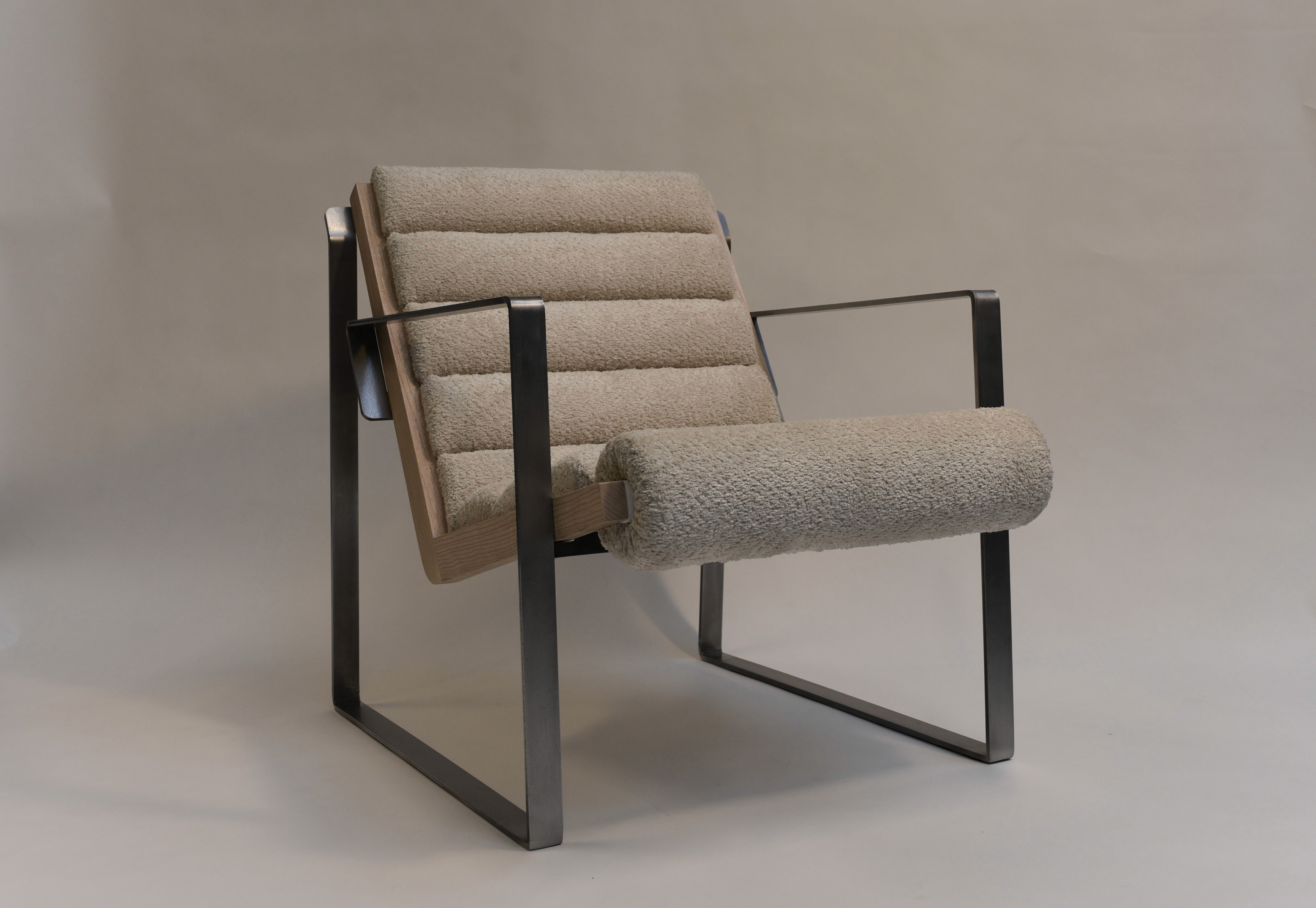
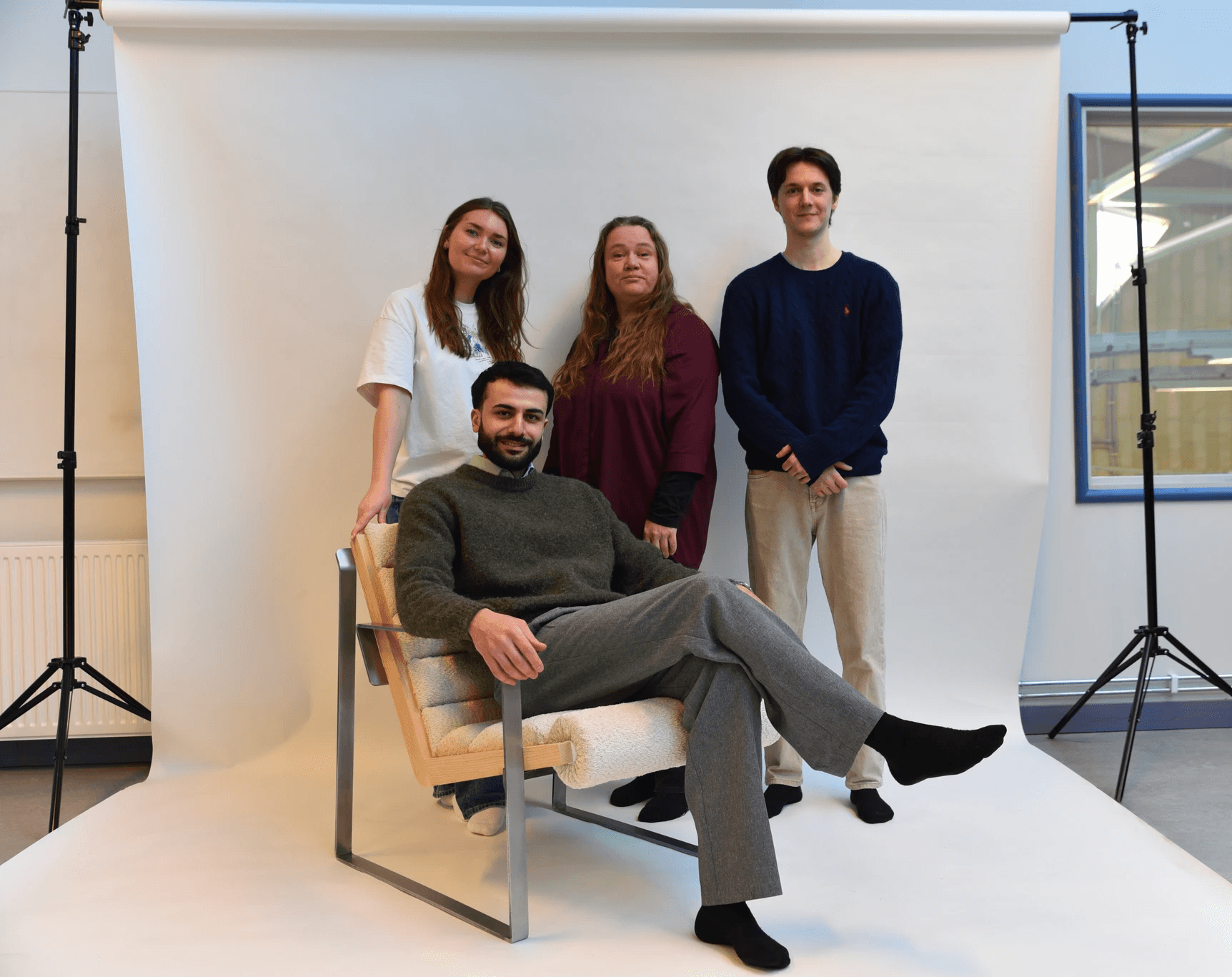
RØN was developed as a collaborative university project exploring interaction as a functional theme in furniture design. The objective was to integrate a kinetic element into a structurally exposed lounge chair while maintaining ergonomic and structural integrity. Within the team, I was responsible for the structural geometry development, CAD modeling, and integration of the rotating front mechanism. The construction was developed and validated through physical prototyping.
RØN was developed as a collaborative university project exploring interaction as a functional theme in furniture design. The objective was to integrate a kinetic element into a structurally exposed lounge chair while maintaining ergonomic and structural integrity. Within the team, I was responsible for the structural geometry development, CAD modeling, and integration of the rotating front mechanism. The construction was developed and validated through physical prototyping.
The Challenge
The Challenge
The challenge was to design a furniture piece centered around interaction as a functional principle rather than a decorative gesture. The objective was to integrate a kinetic element into a structurally rigid lounge chair while preserving ergonomic integrity and geometric restraint. The rotating front cylinder had to reinforce the interaction concept without compromising load transfer, frame stability, or defined seating geometry.
The challenge was to design a furniture piece centered around interaction as a functional principle rather than a decorative gesture. The objective was to integrate a kinetic element into a structurally rigid lounge chair while preserving ergonomic integrity and geometric restraint. The rotating front cylinder had to reinforce the interaction concept without compromising load transfer, frame stability, or defined seating geometry.
Process
Process
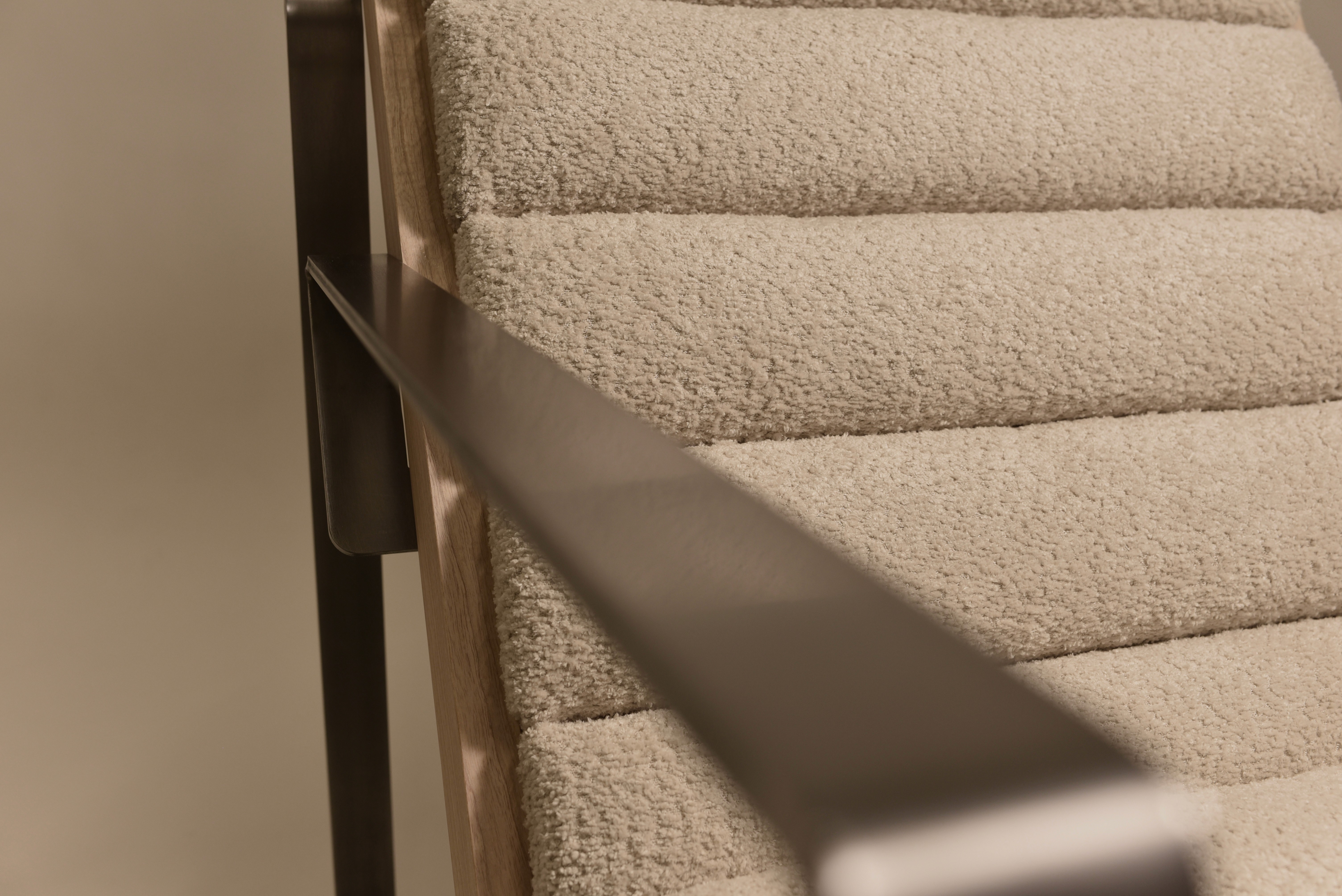
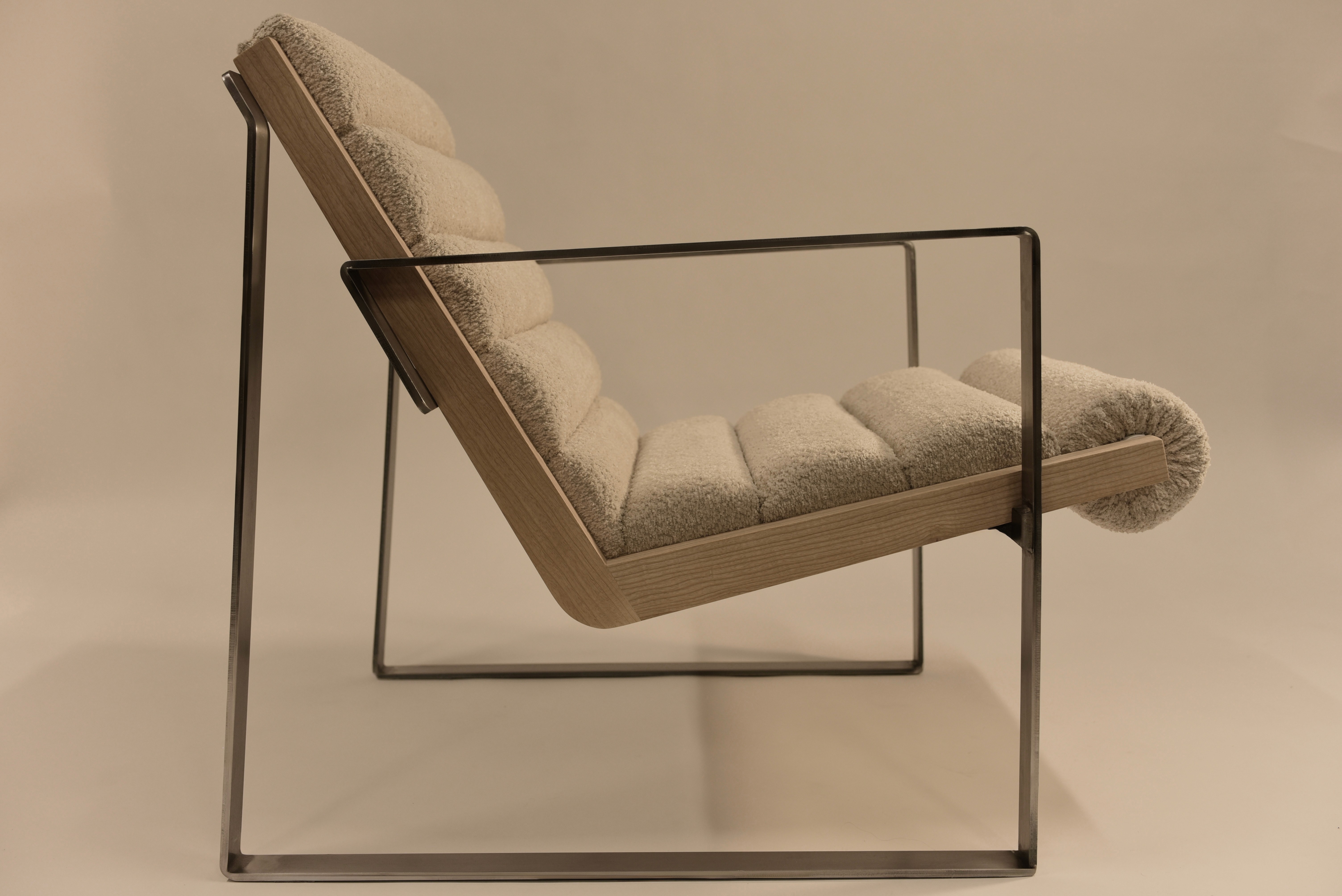
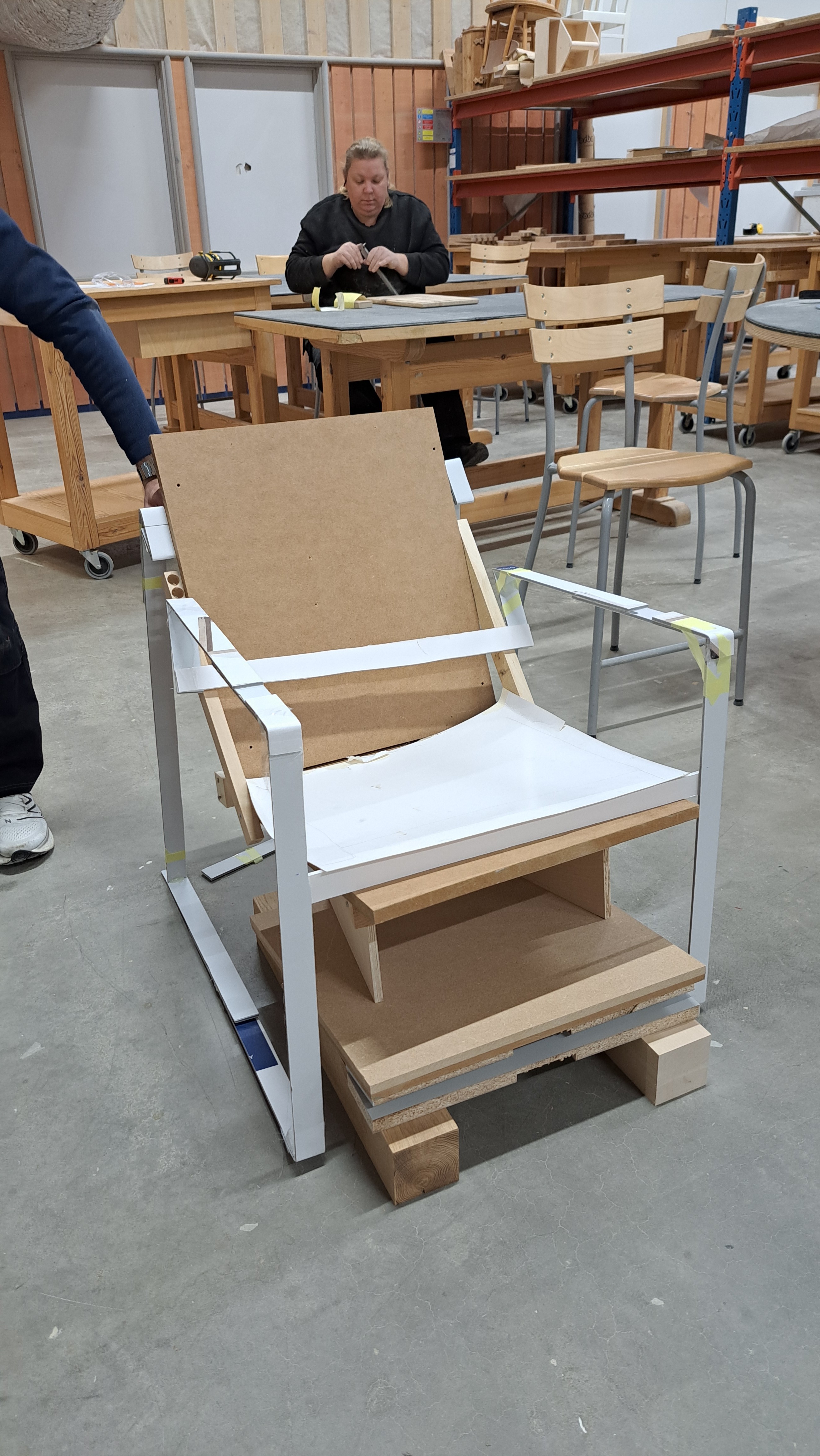
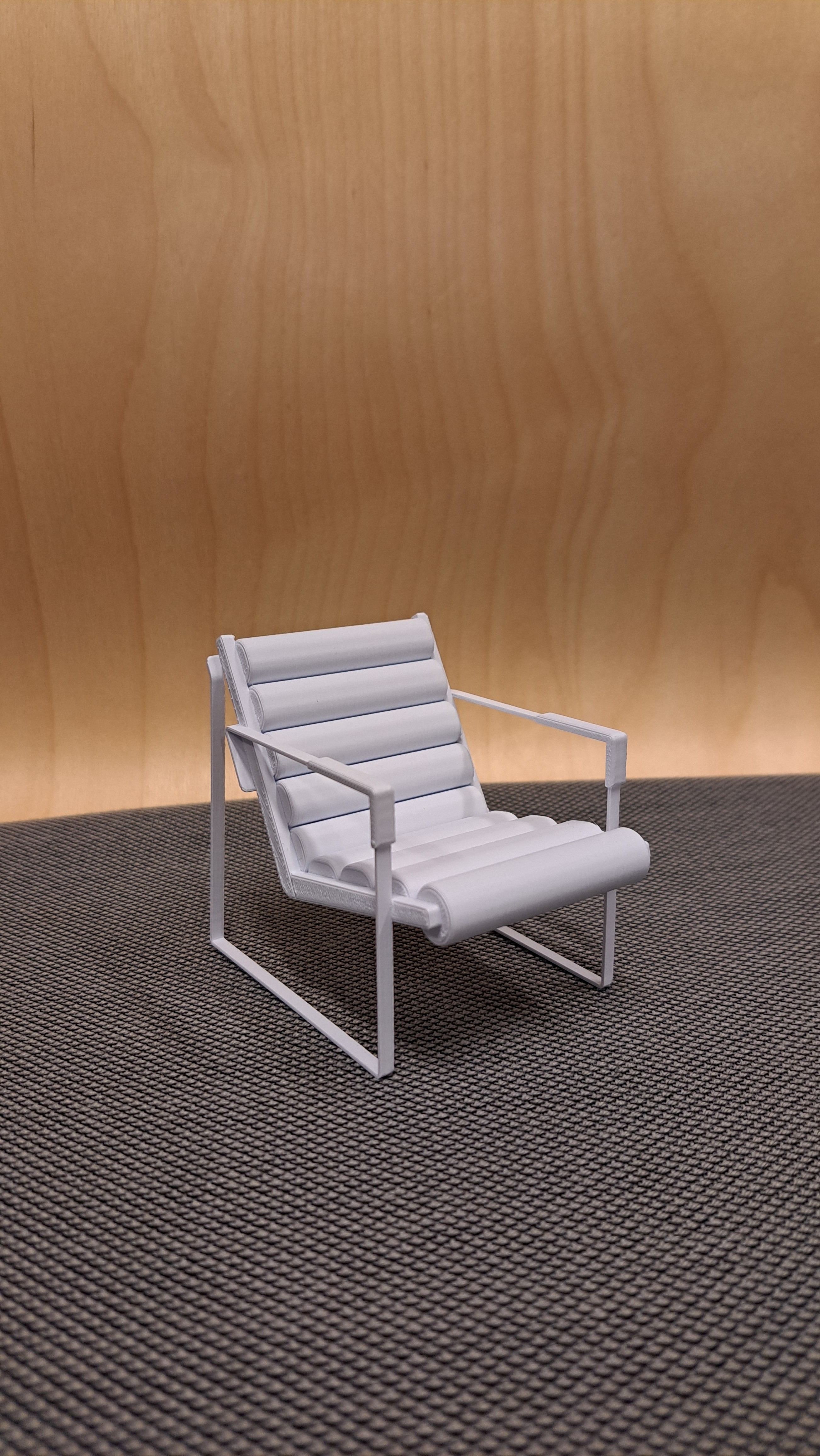
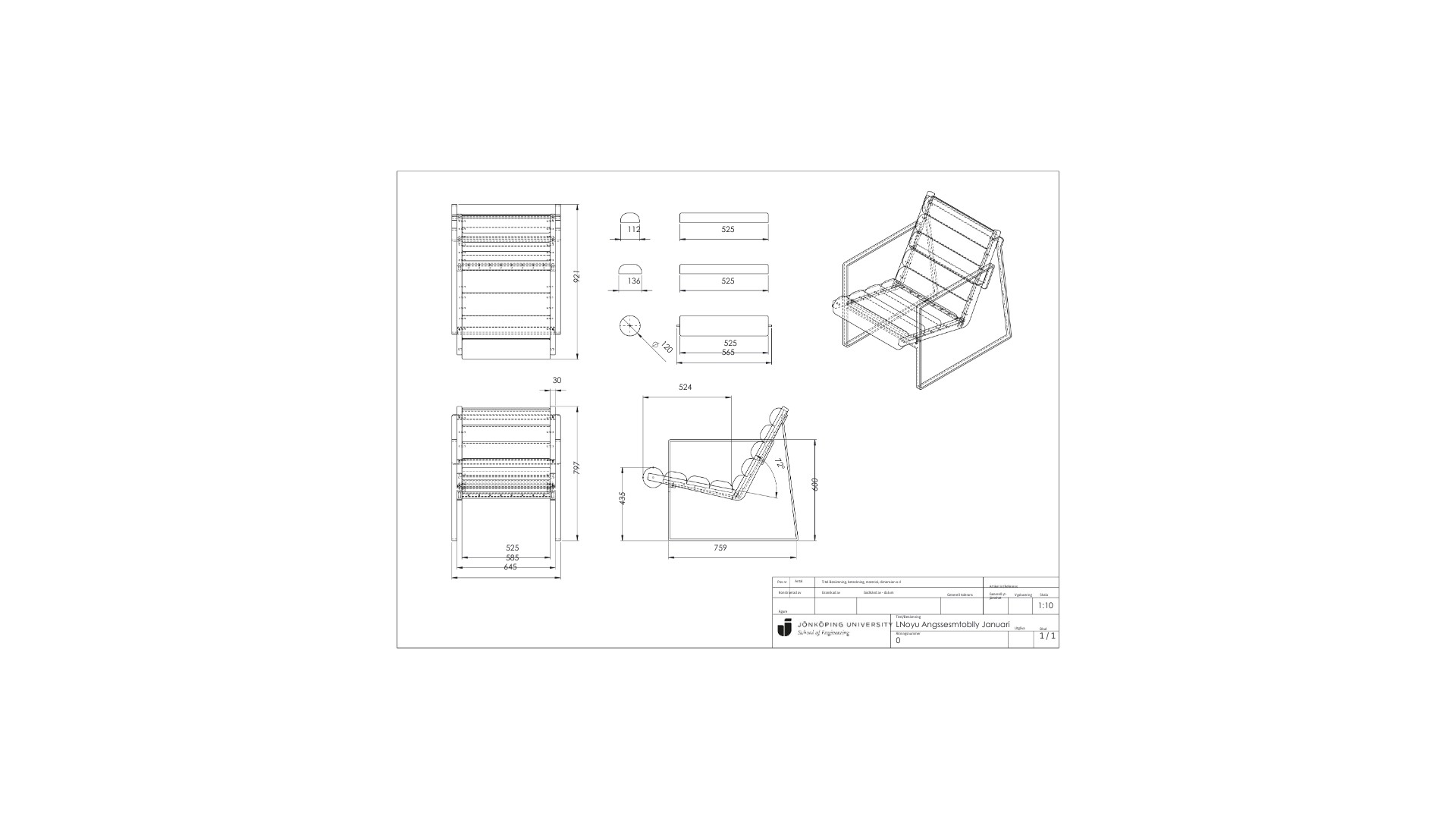
I developed the overall geometry and structural layout of the chair, defining the 72° back angle and seat height through ergonomic evaluation. The rotating front cylinder was designed and positioned to remain mechanically independent from the primary load-bearing frame. The complete assembly was modeled in CAD, followed by detailed manufacturing drawings with defined tolerances and welding specifications. I contacted and coordinated with external suppliers for textile upholstery and frame welding, providing precise technical drawings and dimensional requirements to ensure fabrication accuracy. A physical prototype was built and evaluated, leading to refinement of cushion segmentation to improve load distribution and seating balance.
I developed the overall geometry and structural layout of the chair, defining the 72° back angle and seat height through ergonomic evaluation. The rotating front cylinder was designed and positioned to remain mechanically independent from the primary load-bearing frame. The complete assembly was modeled in CAD, followed by detailed manufacturing drawings with defined tolerances and welding specifications. I contacted and coordinated with external suppliers for textile upholstery and frame welding, providing precise technical drawings and dimensional requirements to ensure fabrication accuracy. A physical prototype was built and evaluated, leading to refinement of cushion segmentation to improve load distribution and seating balance.
Reflection
The rotating front cylinder functioned as intended and remained mechanically independent from the load-bearing frame. However, the welded steel construction resulted in a relatively high overall weight, affecting portability and handling.
The project highlighted the trade-off between structural rigidity and material efficiency. In further development, I would explore alternative section profiles or material reduction strategies to lower weight without compromising stability.
Reflection
The rotating front cylinder functioned as intended and remained mechanically independent from the load-bearing frame. However, the welded steel construction resulted in a relatively high overall weight, affecting portability and handling.
The project highlighted the trade-off between structural rigidity and material efficiency. In further development, I would explore alternative section profiles or material reduction strategies to lower weight without compromising stability.
D
D